 LinkedIn
 Facebook
 X.com
X.com
 WeChat
 Email
Email

Modern vehicles require components from across the globe, and, in response, the automotive supply chain has evolved into a complex, sprawling beast. But this exposes businesses within the industry to supply chain disruption.
Maersk’s latest research, Course for Change, reveals just how exposed they are. In the most recent fiscal year, the average automotive company lost 4.7% of its revenue to disruption– more than their counterparts in any other global industry.
Our research, which draws on the responses of 190 senior logistics and supply chain professionals in the automotive industry, compares the responses to disruption of ‘frontrunners’ (highly resilient companies whose losses in their last fiscal year amounted to less than 1% of revenue) and ‘followers’ (who faced losses of more than 5%).
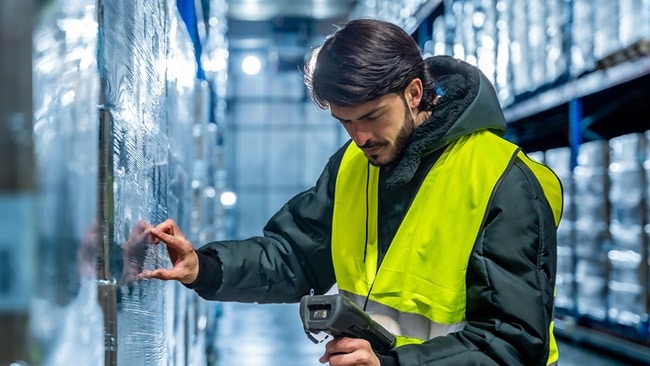
‘Visibility’ – the ability to see what’s going on anywhere in the supply chain at any given time – emerges as a key focus for automotive. But visibility alone is insufficient. The frontrunners are investing in the tools and relationships that will support them in reacting to situational changes.
Visibility as the first step
The automotive industry is particularly vulnerable to the repercussions of supply chain disruption – and the situation is deteriorating. Almost a third of businesses rank costs associated with disruption among their top three setbacks over the past two years.
The fact that the average internal combustion engine vehicle requires around 30,000 components from suppliers across the globe goes a long way to explaining this. And the rapid electrification of the industry adds new risks. Increasingly, manufacturers depend on hard-to-source metals, magnets, and other components.
This has implications. For half of the frontrunners, demand for end-to-end visibility is increasing in response to changing product lines, such as electric or autonomous vehicles. A significantly smaller cohort of the followers (34%) recognises the urgency of the matter.
Modern production processes are another source of sensitivity to disruption. Just-in-time manufacturing requires tight, regimented production cycles and increasing consumer demand for customisable vehicles is leading businesses to pivot to build-to-order supply models, meaning they have slimmed down inventories.
Amit Pursooth, Head of Vehicle Supply Chain, Toyota Motor Europe, explains the move to increased flexibility: “Lean distribution is a key transformation for us. Stock can hide issues and tie up capital, so we are building more to order and reducing lead times to improve customer satisfaction.
The success of this approach is highly contingent on detection of early warning signs, making visibility paramount. But identifying disruption is only the first step.
Responding to alerts
As the operating landscape grows more volatile, companies will need to be able to action their disruption-related alerts. While visibility allows businesses to see trouble coming, frontrunners recognize that flexibility is the key to an effective response. For 95%, the ability to switch to alternative routes or backup providers is increasingly important.
In practice, this could mean rerouting shipments, reprogramming production or reprioritising resources. For example, if a manufacturer identifies a shortage of a particular component at one of its plants and knows there is a non-urgent shipment of those components en route to a different facility, it could divert the shipment in real time, schedule a new one to the original destination, and avoid downtime in any of the assembly lines. But this only works if visibility and actionability go hand in hand. Logistics service providers (LSPs) can play a key role here (see Services for visibility and resilience below).
Why leading car makers are turning to Tech
Technology is helping businesses scale their response to disruption. The frontrunners are paving the way: half are investing in supply chain visibility tools to improve real-time monitoring and decision-making, compared with just 34% of followers.
“If you want to identify and respond to risk, digitalisation is very important,” says Jenny Zhang, Head of Supply Chain Management, APAC, at AUMOVIO. “You need to know where your suppliers and parts are at all times. These tools provide end-to-end visibility.”
COO Kersten Janik explains how WITTE Automotive is using Catena-X, a collaborative automotive data ecosystem, to improve transparency and resilience. “We gain visibility across the entire supply chain, down to the next level and beyond,” he says. Such tools equip automotive manufacturers with the breadth of oversight required to manage multiple risks simultaneously across their vast networks, facilitating faster, more agile responses.
Services for visibility and resilience
Gemini East West network
Our ocean freight system harnesses hub-and-spoke shuttle models to achieve early scheduling reliability of over 90% on East-West ocean lanes.
Prism
Our premium delivery guarantee service for critical shipments uses asset control and integration capabilities to reroute, reprioritise cargo, and change transportation modes to mitigate extreme operational disruptions.
Control towers
Part of our suite of supply chain management tools, control towers offer exceptions-based monitoring to detect issues, provide rerouting options and act on behalf of our customers.
Visibility studio
Our real-time shipment tracking solution provides predictive and actionable insights into disruption, congestion, lead-time reliability and detention management on a single platform.
Supply Chain Resilience Model
Our customisable model harnesses real-time visibility and predictive insights to manage disruption, enhance operations, and ensure supply chain continuity.
Seeing visibility as a team sport
Achieving end-to-end visibility in such an interconnected industry requires collaboration. Most businesses (76%) agree this is crucial to preparing for disruption and developing risk mitigation.
Pursooth explains that trust and open communication are central to Toyota’s ‘bad news first’ approach. “Real-time information enables real-time action,” he explains. “One of our suppliers experienced a fire that damaged several tools. As soon as we were informed, we dispatched a team to ‘go and see’ (genchi genbutsu) the situation first-hand, assess the risk, and align on recovery actions. In just four weeks, the supplier was back on track.”
But not all businesses are so collaborative. While 64% of frontrunners are exchanging real-time data with suppliers and LSPs, just 48% of followers are doing so.
When it comes to assessing the services offered by these businesses, frontrunners insist on visibility. Followers, in contrast, focus directly on solutions such as diversifying transport options, while visibility ranks within the bottom three. This suggests they still view their partnerships with LSPs as transactional, rather than strategic.
Supply chain resilience depends on the transparency and availability of real-time data. In the face of ongoing disruption, automotive businesses must harness the power of relationships. Without collaboration, even the most advanced tools will fail to achieve end-to-end visibility.
Three priorities for automotive OEMs to turn visibility into actionability
- Map supply chains beyond tier 1 to understand hidden risks and accelerate responses.
- Harness advanced tools, such as control towers, to act on disruption in real time. (LSPs are your allies here.)
- Build genuine, peer-level partnerships with all suppliers – from small component makers to major tech firms.
Learn more from the Automotive resilience playbook here.
Be ready for intelligent supply chain resilience to go all the way! Explore the full Course for Change report and learn more about Maersk Supply Chain Resilience Model, or for more logistics trends and insights, read and download The Logistics Trend Map.

About FT Longitude
At FT Longitude, we harness the power of intelligence with influence to leave a lasting impression on the world of business. With a focus on pioneering thought leadership strategies, we create high-impact campaigns that transform perceptions. We craft powerful insights that engage key decision-makers, and using creative storytelling techniques, we imprint brands with unforgettable messages that resonate. Part of the Financial Times Group, we help brands reach and connect with the world’s most influential people, through the FT’s 21 million monthly global readers. Visit longitude.ft.com and find us on social media.