 LinkedIn
 Facebook
 X.com
X.com
 WeChat
 Email
Email
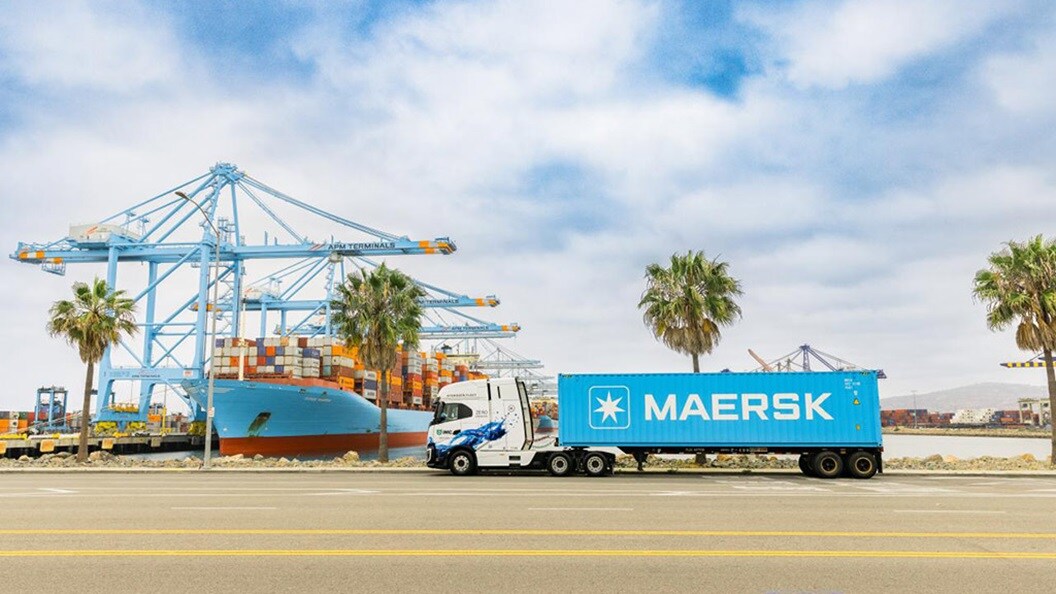
For years, many shippers viewed inland transportation primarily as a tactical function focused on moving containers between ports, rail terminals, warehouses, and distribution centres.
Today, that view is changing.
As logistics networks become more interconnected, the performance of inland transportation operations can influence far more than cargo movement. It can affect inventory availability, warehouse efficiency, customer service levels, transportation costs, and the overall flow of goods across the network.
At the same time, the operating environment is becoming more complex. Importers are navigating shifting trade flows, fluctuating demand, labour availability constraints, rising service expectations, and continued pressure to move cargo more efficiently through inland networks. Across the U.S., the trucking market is also undergoing structural shifts, including carrier consolidation and continued pressure on driver availability, further tightening the balance between supply and demand.
As a result, many transportation leaders are beginning to view inland transportation not simply as a source of truck capacity, but as a critical component of supply chain resilience.
The hidden complexity of inland logistics
When disruptions occur, attention often focuses on ports, vessels, or ocean transit. However, many of the most persistent challenges emerge after cargo reaches shore.
A delayed container pickup can disrupt warehouse scheduling. Rail congestion can create downstream inventory imbalance. Chassis constraints and distribution centre bottlenecks can all increase dwell times and reduce overall supply chain velocity.
Even as port operations across major U.S. gateways remain relatively stable, inland transportation performance shows a different pattern. PMSA data indicates that truck-destined containers have remained consistently under three days of dwell for an extended period, while rail-bound cargo continues to experience greater variability depending on network conditions and terminal flows. This divergence highlights a structural reality: cargo velocity is increasingly shaped less by port operations and more by inland coordination and routing efficiency.
This means inland transportation decisions increasingly influence performance across the entire supply chain—not just the first or last mile.
Why traditional procurement models are being reassessed
While transportation procurement has historically often been driven by securing the lowest rate, in an increasingly volatile logistics environment, organisations are recognising that price alone does not determine performance.
The U.S. trucking sector continues to experience pressure from rising operating costs, carrier consolidation, labour availability constraints, and evolving regulatory requirements. Fuel costs, which can represent a significant portion of overall operating expenses, continue to add further pressure on carriers already managing tight margins.
Recent industry data shows that carrier exits have exceeded new market entrants over recent periods, reflecting ongoing capacity adjustments within parts of the trucking ecosystem.
Against this backdrop, supply chain leaders are increasingly evaluating not only whether capacity is available, but whether it can perform consistently when conditions change. Available capacity and dependable capacity are not always the same thing, and increasingly, the lowest-cost option is not always the most reliable.
The growing value of optionality
One of the most significant shifts in the market is the growing importance of optionality. Rather than relying on fragmented transportation networks or rigid operating models, many shippers are seeking greater flexibility in how cargo moves through inland supply chains.
For example, when terminal congestion increases, warehouse appointments tighten, or regional capacity becomes constrained, access to alternative transportation options can help maintain flow and reduce disruption. For organisations operating across multiple U.S. gateways and inland corridors, this flexibility is becoming increasingly valuable.
In practice, optionality can include:
- Access to broader carrier multi-carrier and multimodal networks
- Carrier-agnostic execution
- Integrated warehousing and inland support
- Pre-pull and container storage capabilities
- Chassis coordination
- Alternative routing options
- Regional market coverage
- End-to-end inland visibility
The objective is not redundancy for its own sake, it’s maintaining continuity when operating conditions shift.
Why optionality alone is not enough
While optionality improves flexibility, it does not automatically deliver resilience. Optionality is becoming more important, but its value depends on how well it is coordinated.
As inland networks become more interconnected, the challenge is no longer simply having access to multiple options. The challenge is coordinating those options effectively.
Carrier networks deliver greater value when supported by visibility. Alternative routing becomes more effective when aligned with warehouse capacity and inventory positioning. Additional capacity becomes most useful when it can be integrated seamlessly into ongoing operations.
In practice, this coordination can also extend across ocean and inland transportation. When inland moves are aligned with ocean carrier solutions, such as carrier haulage, shippers may be better positioned to manage downstream cost exposure. This can include reducing risks related to detention and demurrage, as well as mitigating the impact of terminal congestion, appointment delays, and extended pickup times. In more volatile or capacity-constrained environments, this level of coordination can become a meaningful differentiator in maintaining both cost control and operational flow.
This is why many organisations are shifting their focus from capacity management towards logistics orchestration. Instead of managing transportation, warehousing, visibility, and inventory as separate functions, they are increasingly looking to align these into a connected inland ecosystem.
From inland execution to supply chain orchestration
Historically, inland transportation was viewed as a tactical, transactional service managed independently from broader supply chain strategy. Today, it’s becoming a strategic layer within inland logistics performance.
Inland transportation can directly influence:
- Inventory positioning
- Warehouse productivity
- Rail coordination
- Terminal fluidity
- Customer delivery performance
- Overall landed cost
As a result, many supply chain leaders are shifting focus from individual moves to system performance. This means inland decisions are no longer isolated operational choices; they’re part of how your supply chain performs under both normal and disrupted conditions.
Preparing for the next phase of supply chain volatility
Transportation markets will continue to evolve, and cycles of tightening and loosening capacity are likely to remain part of the landscape. However, many of the challenges affecting inland transportation today—including operational complexity, labour constraints, infrastructure pressure, and rising service expectations—are unlikely to disappear.
This creates an opportunity to rethink how resilience is built into your transportation strategy.
For many organisations this also includes taking a closer look at the stability of their transportation partners—evaluating not just cost, but financial resilience, operational consistency, and the ability to perform reliably across changing market conditions.
Organizations that combine cost discipline with visibility, network depth, operational flexibility, and coordinated execution are better positioned to maintain performance through changing conditions. Providers with established inland networks and decades of experience navigating market cycles can play an important role in supporting this shift toward more resilient supply chains.
Because in today’s U.S. inland transportation environment, competitive advantage comes less from access to capacity—and more from the ability to coordinate it. The question is no longer whether capacity exists. It’s whether your supply chain can keep moving when conditions change.
Be ready for your inland strategy to go all the way! Discover more with Maersk Logistics Insights, and learn more about inland transportation with Maersk.