 LinkedIn
 Facebook
 X.com
X.com
 WeChat
 Email
Email
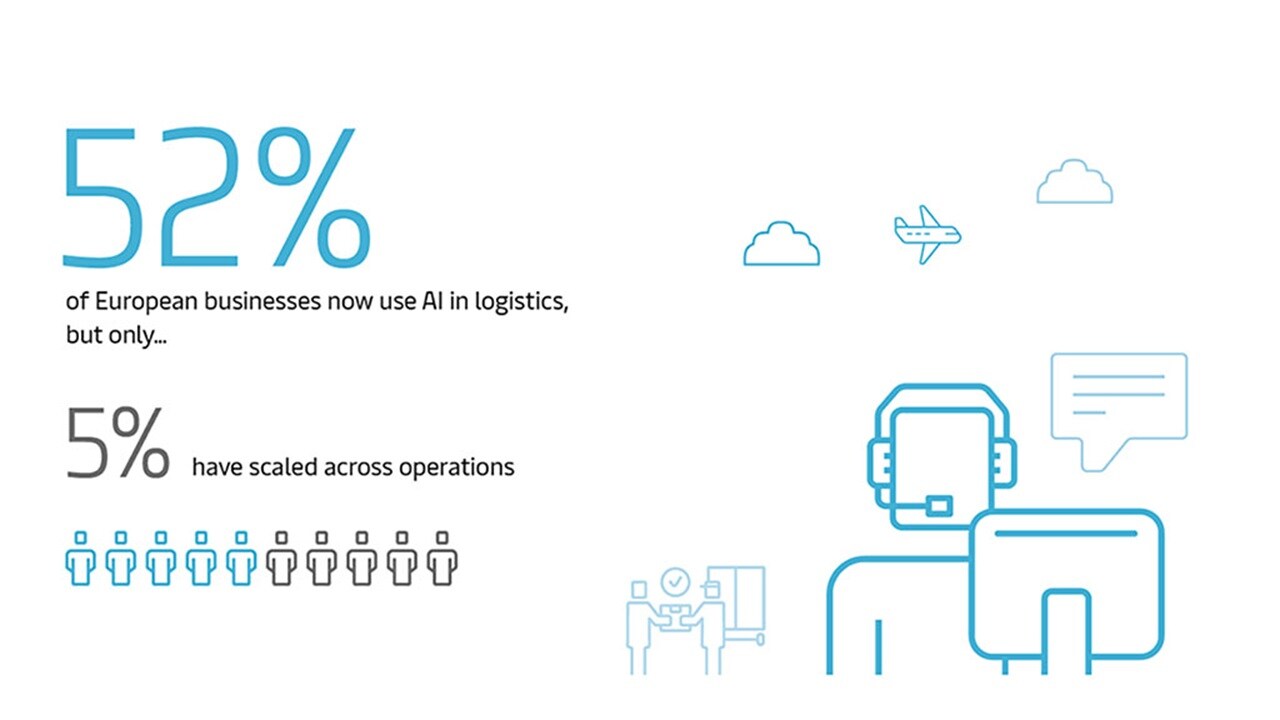
For years, discussions around AI in supply chains focused on whether the technology was mature enough for practical use, but today it’s a very different picture, with Maersk data showing that 52% of European businesses are now using AI to make their logistics more efficient in one way or another.
And when you factor in AI’s rapid speed of development, it’s pretty safe to assume that 52% figure is likely growing by the day.
However, the real challenge facing organisations now is how they can embed it effectively across people, processes, and decision-making and turn promising experiments into meaningful transformation. Our survey data reflects as much, with only 5% of European businesses telling us they have successfully scaled AI across their operations.
The findings also suggest that the biggest obstacles aren’t even technological. Lack of skills (30%), low prioritisation (28%), and uncertainty around value (28%) all rank among the leading barriers to adoption.
All of this points to a wider reality facing European supply chains: scaling AI is as much an organisational challenge as it is a technical one, and successfully bridging the gap between experimentation and adoption may become one of the defining competitive battlegrounds for European supply chains in the years ahead.
Scaling AI beyond pilot testing
So why are so many business running pilots, but relatively few have solved the problem of embedding AI into day-to-day operations?
Well, the companies making progress are often those that focus less on the technology itself and more on how work gets done – getting closer to the front line, building the right process standardisation, and perfecting change management internally.
If processes vary across the business, scaling AI becomes difficult because there is no consistent foundation on which to build. Organisations can therefore find themselves running dozens of successful pilots without achieving a broader operational impact.
And the impact they’re looking to achieve will undoubtedly be a very important one.
Right now, businesses are operating in an environment defined by geopolitical uncertainty, changing trade patterns, increasing customer expectations, and ongoing pressure to improve efficiency. In this context, AI's greatest potential lies within decision-making from end to end – moving from a reactive supply chain to predictive one.
For example, if a weather event or terminal disruption threatens a shipment, AI can help identify the issue earlier and provide customers with alternative options before delays escalate. Rather than simply reporting what has happened, supply chains can increasingly anticipate what is likely to happen next.
Looking ahead as AI matures, supply chains are expected to become increasingly intelligent, with systems capable of sharing information and coordinating decisions automatically. Routine decisions that currently require human intervention may eventually be handled by AI agents operating across logistics networks.
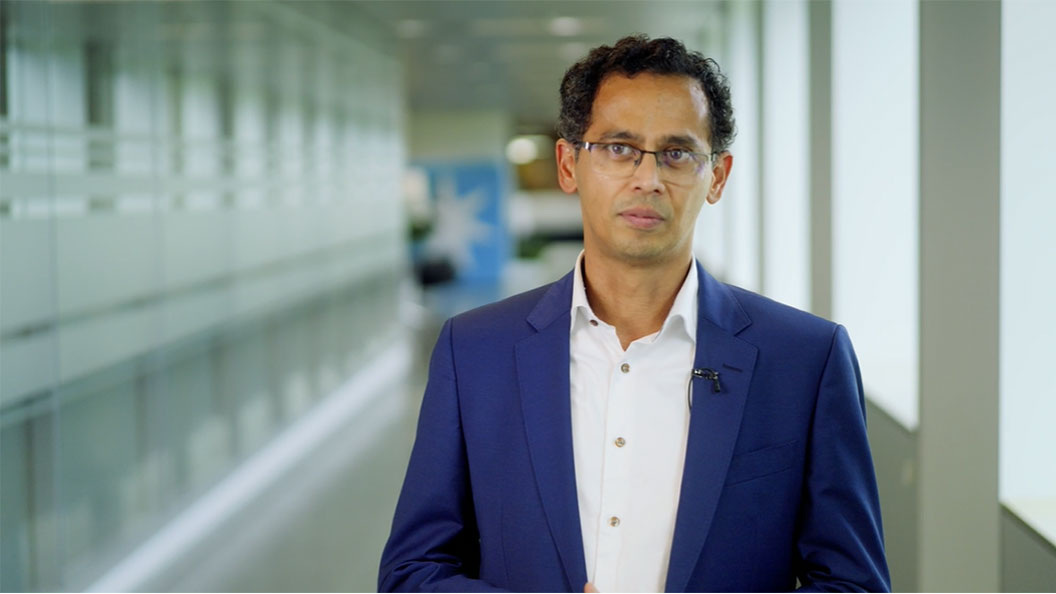
Maersk is looking to be at the forefront of such developments to the benefit of its customers, and in the above video Krishnan Srinivasan (Maersk SVP TSE and Chief Data Officer) outlines what the company is working on right now, what’s coming in the future, and his advice for those just starting on their AI journey.


